Only 1 in 6 emergency vehicles are low emission, reveals new study
Back to 'Expert guides'Only 15% of the UK’s emergency vehicle fleet is zero or low emission, according to our new research.
That means just one in six emergency vehicles is electric or hybrid, with adoption varying across services and regions. Our findings reveal clear leaders, areas where progress is slower and a postcode lottery shaped by policy, funding and operational challenges.
The research draws on Freedom of Information (FOI) requests; out of the 104 emergency service bodies we contacted, 90 provided usable data for analysis, offering the most complete snapshot yet of how blue light fleets are progressing towards net zero.
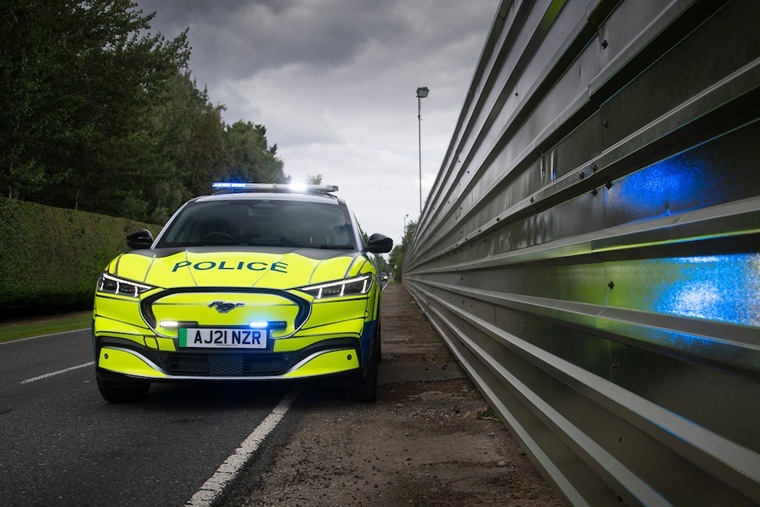
Blue Lights, Green Gaps: Where Emergency Fleets Stand Today
Across the UK, there are more than 40,873 operational emergency vehicles. Of these, 2,347 are fully electric and 3,703 are hybrid. That leaves 85% still running on petrol or diesel.
Mike Fazal, motoring expert and CEO, outlines: “Emergency fleets are at the frontline of public service, but when it comes to decarbonisation the picture is mixed. Some forces and regions are making significant strides, while others face real barriers to change.
“This isn’t simply about switching vehicles - it’s about matching technology to day-to-day needs, securing the right infrastructure, and having a long-term plan that balances performance, cost and sustainability. That’s the challenge if we want to create a greener future for blue light fleets.”
Each branch of the emergency services has very different operational needs. Police forces, with their mix of response cars and smaller vehicles, are generally further ahead. Fire and Rescue services and NHS Trusts face greater hurdles, as much of their fleet consists of heavy, highly specialised vehicles that are harder to electrify.
![Yorkshire_Ambulance_Service_NHS_Trus[1]](https://cdn1.leasing.com/cms/yorkshire_ambulance_service_nhs_trus-1-.jpg "Yorkshire_Ambulance_Service_NHS_Trus[1]")
Scotland Leads the Way, While Other Regions Lag Behind
Regionally, the picture is far from uniform. Scotland is the clear leader, with one in three vehicles (33%) now electric or hybrid. At the other end of the scale, Northern Ireland has just eight low-emission emergency vehicles in total, only 1% of its fleet.
That gap becomes even clearer when comparing absolute numbers: Scotland has 1,207 low-emission emergency vehicles while Northern Ireland has 150 times fewer.
The best and worst performing regions are:
- Scotland – 1,207 (33%)
- West Midlands – 864 (19%)
- North West – 584 (19%)
- North East England - 343 (19%)
- South West – 745 (15%)
- Wales – 452 (15%)
- London - 212 (13%)
- East of England - 436 (12%)
- East Midlands - 402 (11%)
- South East England - 426 (10%)
- Yorkshire and the Humber - 371 (8%)
- Northern Ireland - 8 (1%)=
London’s position on this list is especially striking. Despite its well-known Ultra Low Emission Zone (ULEZ), just 13% of its emergency fleet is low emission, and it has the second lowest of all regions. This may be partly explained by the Metropolitan Police Service not responding to our FOI request, but the contrast with other major UK regions remains significant.
Across all regions, progress towards net zero is largely being driven by hybrid vehicles, which offer a practical bridge between traditional petrol/diesel power and a fully electric future.
Leasing is already helping some services experiment with EV and hybrid technology. For example, Royal Berkshire Fire and Rescue service leases a Toyota RAV4 Plug-in Hybrid SUV for driver training, allowing it to reduce emissions without the upfront cost of purchasing.
A Quarter of Scotland’s Emergency Fleet is Fully Electric
Scotland also leads when it comes to fully electric vehicles. Almost a quarter (24%) of its operational emergency fleet is fully electric, compared to the UK average of 5.7%. In total, Scotland operates 880 electric emergency vehicles, far ahead of other regions.
![The_force_is_strong__Nottinghamshire[1]](https://cdn1.leasing.com/cms/the_force_is_strong__nottinghamshire-1-.jpg "The_force_is_strong__Nottinghamshire[1]")
The best and worst regions for electric vehicle adoption are as follows:
- Scotland - 880 (24%)
- Wales - 206 (7%)
- London - 120 (7%)
- South West England - 297 (6%)
- North West England - 182 (6%)
- East Midlands - 157 (4%)
- North East England - 77 (4%)
- East of England - 123 (3%)
- Yorkshire and the Humber - 113 (2%)
- West Midlands - 107 (2%)
- South East England - 81 (2%)
- Northern Ireland - 4 (0.3%)
These figures show that the pace of fully electric adoption varies significantly, with many regions still at the very early stages of integrating EVs into their fleets. They remain a smaller proportion of the fleet compared with hybrids, and scaling adoption will depend on infrastructure investment, supply chains and funding support.
Across all emergency services, some fleets are leading the way when it comes to electric adoption:
- Police Scotland – 24%
- Cornwall Fire and Rescue – 24%
- Gloucestershire Constabulary – 17%
- Heddlu Gwent Police – 15%
- North West Ambulance Service – 10%
These examples demonstrate both progress and a potential blueprint for other emergency fleets.
Police Fleets Are Leading the Charge in EV Adoption
Among the three branches, police forces are furthest ahead. Out of the 24,063 police vehicles in our dataset, 16.3% are zero or low emission, above the emergency service average. But adoption is uneven, with some forces having almost half a fleet of low-emission vehicles, and others yet to start.
Best Performers:
- Gloucestershire Constabulary - 46%
- Police Scotland - 33%
- Northumbria Police - 33%
- West Midlands Police - 27%
- Merseyside Police - 26%
Lowest Performers
- Thames Valley Police - 0%
- Hertfordshire Constabulary - 1%
- North Yorkshire Police - 1%
- Police Service of Northern Ireland - 1%
To understand how police fleets are approaching adoption, and the barriers that they’re facing, we reached out to Thames Valley Police. We were especially interested in why their figures currently show no electric or hybrid vehicles.
Speaking exclusively to Leasing.com, Assistant Chief Constable Dennis Murray said: “Thames Valley Police is leading a six-force consortium through Chiltern Transport to explore fleet electrification. Expert market advice has already been gathered, and working groups are in place to shape the next steps, with a joint meeting planned for November.
“Our current position reflects practical constraints including insurance spacing requirements, compact site sizes, electricity availability, MET testing, vehicle suitability, and budget limitations. As with any new technology, adopting electric and hybrid vehicles requires new ways of working and access to reliable information, which are being developed as part of our transition planning.”
This shows that even where adoption is low today, the groundwork for future change is already in motion.
Fire and Rescue: Overcoming Complex Challenges
Fire and Rescue services face some of the toughest challenges when it comes to decarbonising their fleets. Much of their fleet is made up of large, highly specialised appliances that are difficult to electrify.
Change can be slower, but innovation and planning are helping to drive progress where possible. A great example of this is ZEPA1, the UK’s first electric fire engine, which was introduced by London Fire Brigade in 2022.
Out of the 8,670 operational vehicles in our dataset, one in six (16.1%) are zero or low emission.
Best Performers:
- Shropshire Fire and Rescue - 100%
- Suffolk Fire and Rescue - 100%
- Cambridgeshire Fire and Rescue - 40%
- Cheshire Fire and Rescue - 38%
- Hertfordshire Fire and Rescue - 34%
Low Performers
- West Sussex Fire and Rescue Service - 1%
- Warwickshire Fire and Rescue Service - 2%
- West Midlands Fire Service - 2%
- South Yorkshire Fire and Rescue - 3%
- Devon and Somerset Fire and Rescue - 4%
Eight services have no zero or low emission vehicles at all, relying entirely on petrol or diesel: Surrey, Cleveland, East Sussex, Lincolnshire, North Yorkshire, Northamptonshire, Northern Ireland and the Isle of Scilly.
We reached out to some of these branches, to learn more about their lack of visible progress.
A spokesperson for Surrey Fire and Rescue Service, speaking exclusively to Leasing.com, shares: “As a fire and rescue service, we must always be ready to respond to emergencies 24/7. Our existing fleet allows us to do that reliably with the infrastructure we currently have in place.
“At the same time, we are committed to a more sustainable future as we upgrade sites and equipment. We already have hybrid non-operational vehicles in use and charging points at some of our newer stations. We will also look to introduce more EV and hybrids to our fleet when vehicles are due to be renewed and come to the end of their expected lifecycle.
“Looking ahead, we are preparing a trial of hydrogen-powered vehicles and working with other emergency services to evaluate this technology. This ensures we continue to balance sustainability with our duty to deliver the best possible service to our communities.”
This balance between readiness and sustainability shows why the pace of change in Fire and Rescue fleets can be gradual, but also where the future is heading.
One in 10 NHS Vehicles Are Zero or Low Emission
NHS fleets face unique barriers to switching to zero or low emission vehicles. Long shifts, high equipment loads and the need for instant reliability mean change is slower.
Across the 7,627 NHS vehicles in our dataset, only 9.7% are zero or low emission - around one in ten. That’s the lowest rate of all emergency services, underlining the scale of the challenge for NHS fleets.
Best Performers:
- South Central Ambulance Service - 16%
- East Midlands Ambulance Service - 12%
- London Ambulance Service - 11%
- Yorkshire Ambulance Service - 11%
- North West Ambulance Service - 11%
Speaking exclusively to Leasing.com, a spokesperson from South Central Ambulance Service highlights the urgency of the transition to low-emission fleets: "NHS England has an ambitious commitment to meet Net Zero by 2040; as our fleet accounts for over 80% of our carbon emissions, transitioning to zero / low emissions vehicles is essential in meeting this target.
“We are also aware of being a large source of air pollution, particularly the dangerous particulates from our diesel-powered fleet, which impact on patients, staff and the wider community we serve. Moving to electric vehicles will significantly reduce pollution outside emergency departments, whilst also being cheaper to operate and maintain."

Lowest Performers:
- South East Coast Ambulance Service - 1%
- West Midlands Ambulance Service - 4%
- East of England Ambulance Services - 4%
West Midlands Ambulance Service explains that its current fleet mix reflects day-to-day realities, while also pointing to steps being taken for the future.
A spokesperson told us: “The Trust’s operating model is heavily focussed on ambulances, meaning we have a low proportion of response cars.
“We also have an additional eight electric ambulances on order which are additional to our current emergency ambulance fleet. These new assets will further our knowledge of this technology and its capabilities in front-line operation.
“We have the most modern ambulance fleet of any service with no vehicles over five-years-old. As a result, we are at the forefront of vehicle technology, using the lightest designs and aircraft engineering techniques.”
While NHS Trusts face some of the greatest challenges to decarbonisation, change is underway. Early pilots and trials will play a key role in shaping the next decade of greener fleet development.
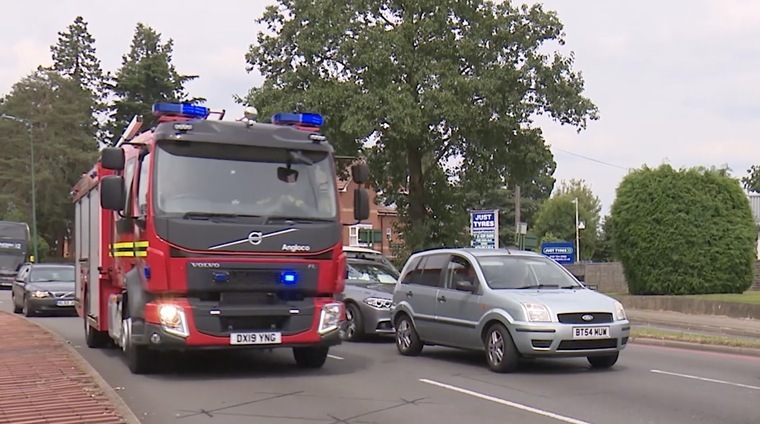
The Road Ahead for Emergency Fleets
Our research shows that progress towards greener emergency fleets is uneven, but change is happening.
Across police forces, Fire and Rescue services, and NHS Trusts, there are clear examples of innovation and ambition, alongside areas where challenges remain. Meeting net zero will require coordinated action, investment in infrastructure and collaboration across services to overcome operational barriers.
Mike concludes: “Emergency services operate in some of the most demanding conditions imaginable. Transitioning fleets to electric is not just about reducing emissions: it’s about building resilience, improving efficiency and demonstrating leadership in public service. It’s a long-term challenge, but one that offers significant benefits for communities, frontline staff and the environment.
“For many emergency services, the shift will not happen overnight. It requires strategic planning, the right funding models, and access to suitable vehicles and charging infrastructure. Leasing electric vehicles could play a key role here, offering fleets flexibility and access to the latest technology without the prohibitive upfront costs of ownership.
“Ultimately, the future of emergency services will depend on how well these barriers are addressed. The strongest progress will come where policy, investment and innovation work together - and where decision makers view decarbonisation not as an extra task, but as an integral part of delivering a modern, sustainable service for the public.”
The road to net zero for emergency fleets will take time, but with shared ambition and targeted investment, it is achievable.
Methodology
We submitted FOI requests to 104 emergency service bodies: 49 fire authorities, 45 police forces, and 10 NHS Trusts. Each authority was asked to provide their operational fleet size, and the number of electric and hybrid vehicles within it.
- 12 bodies did not respond.
- Five referred to public data.
- One declined citing operational risk.
- Police forces excluded unmarked vehicles. FOIs were submitted in July 2025.