First Drive Review: Peugeot 208 2013 1.4 HDi 70 Active

The 208 arrived in UK showrooms in June 2012 as a spiritual successor to the 207, a car which for many fell short of expectations in terms of performance and looks following the phenomenal success of the 206.
So the brief for Peugeot’s latest supermini was simple; fix what the 207 broke. A big ask; the 206 was and still is Peugeot’s biggest selling car with 7.7m units shifted worldwide and 645k in the UK. The 207 didn’t even hit half that (3.1m / 302k).
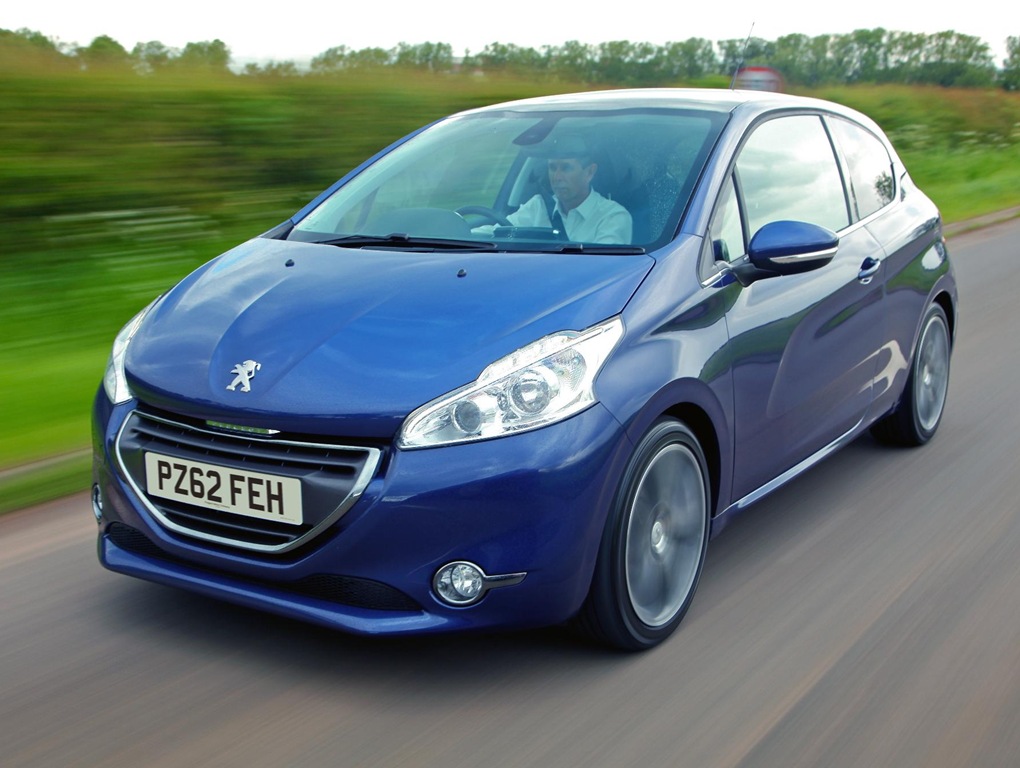
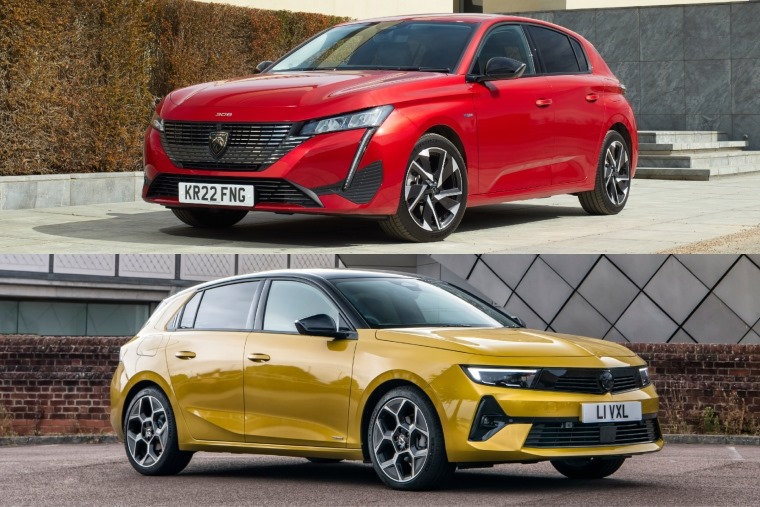
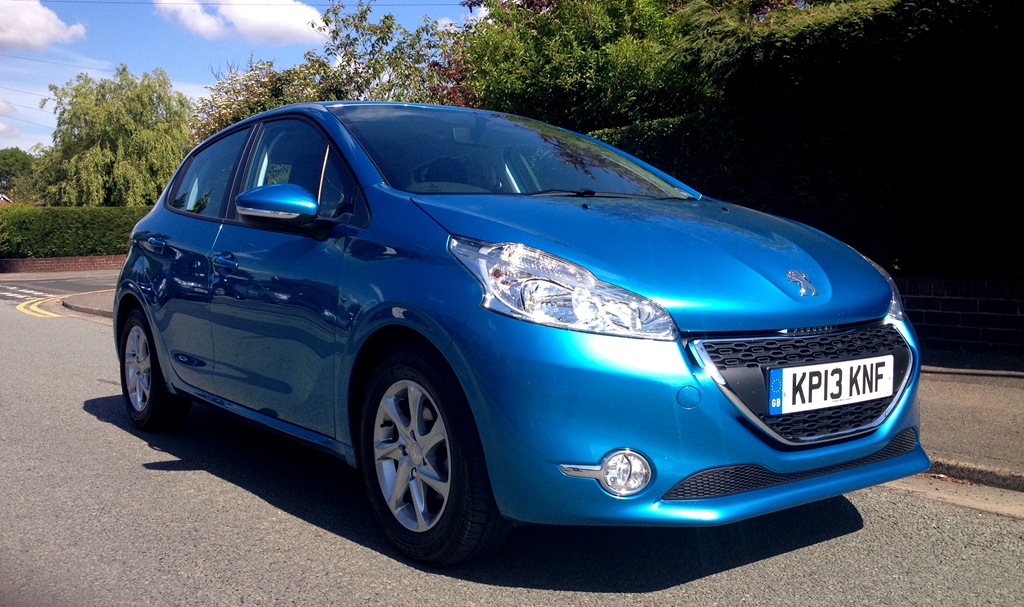
You only have to glance at the 208 on the road to know it is a far tastier and distinctive looking car. And it seems UK car buyers agree with the 208 appearing in the top ten most registered cars for the first six months of 2013. At launch, Peugeot anticipated that just less than four in ten 208s will go to fleets (38%) with three in four being petrol-engined (74%).
Light
We drove the manual 1.4L HDi 70bhp in the Active trim, expected to make up 80% of the 208 mix and one of the most fleet friendly engines, bettered only by an auto transmission start/stop derivative which improves fuel consumption and CO2 output by around 11%.
Boris may have burst its Congestion Charge-exempt bubble (unless you got in there before July 2013) but this 208’s 98g/km CO2 output still qualifies for free road tax like most of its rivals.
Every diesel in the 208 range (and the 1L 68bhp petrol unit) achieves double figure CO2 emissions. Every diesel-powered 208 reports an official combined fuel economy of at least 74.3mpg too, bettering the Corsa’s 67.3mpg and falling just short of the Fiesta’s 76mpg.
It accelerates very much like its rivals too. Reaching 62mph takes 13.5seconds from a standstill, the same as the Fiesta and better than VW’s Polo Bluemotion. The 208’s kerb weight of not much more than a ton (1050kg) is apparent, feeling light and eager despite having just 68bhp to play with.
Headturning
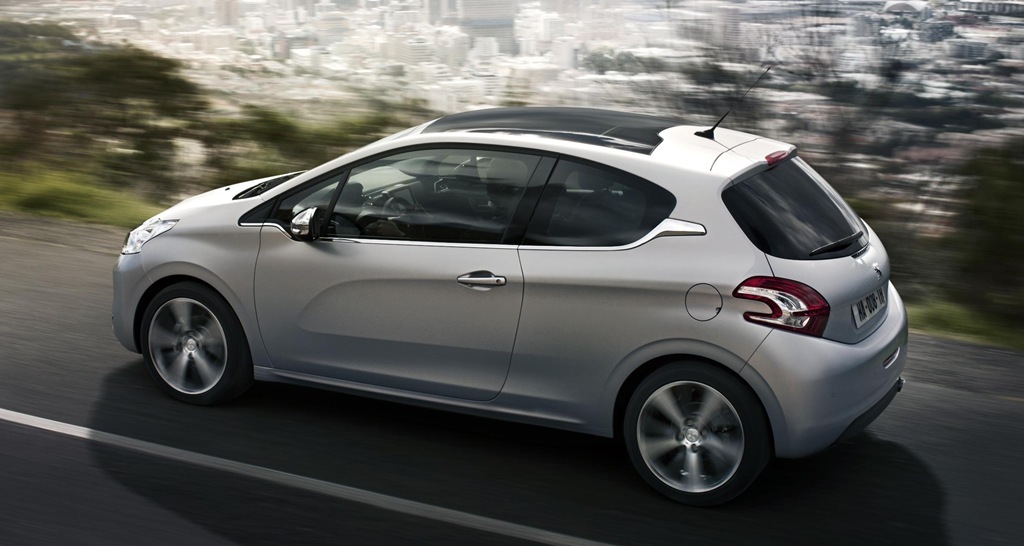
The 208’s fluid silhouette makes it arguably the most headturning (or at least interesting) Peugeot in a long time but inside, the 208 is less inspiring.
The steering wheel is much smaller than many would anticipate. It is meant to make driver feel more in touch with the road and despite it verging on Mario Kart territory, the dinkier steering wheel actually serves as a well-considered and refreshing change.
That aside, the cabin is distinctly flat and shadowy with an overbearing amount of dark grey and black cloth failing to convey the stylish and sophisticated feel Peugeot was probably going for. The plastics don’t help with that either, feeling flimsy in key areas like air vents and on the doors.
The USB/Bluetooth 7” touchscreen infotainment system is far from the best too, crashing twice in the first 24 hours, strangely enough whilst playing Daft Punk. Never again will we make the assumption that a French car is a fan of French music. The laggy sat-nav function is fiddly and awkward too, lacking the ability to enter postcodes, a point which many company car drivers won’t appreciate.
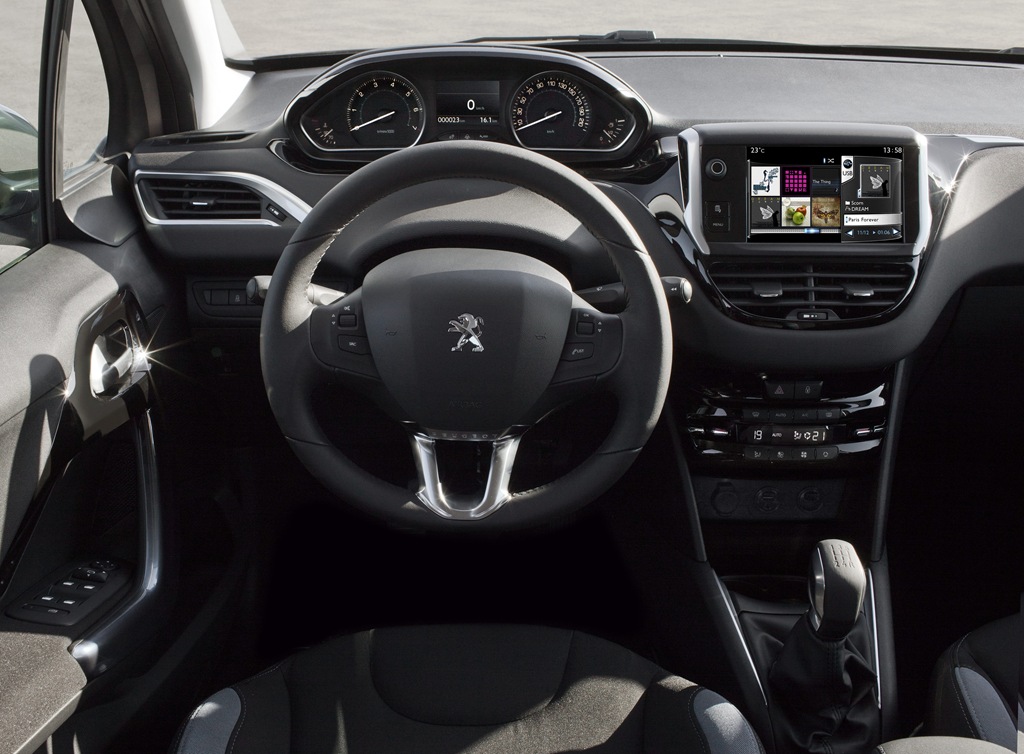
Whilst it isn’t particularly user friendly, the 208 is a generally comfortable if slightly minimal place to be, with black curve cloth sports seats, dual zone air conditioning and audio control buttons on the steering wheel, as well as electric front windows, cruise control and speed limiter as standard.
Peugeot bods have used the 208’s space to great effect, delivering 311 litres of luggage space, 21 litres better than the next largest (Fiesta). This opens up to 1152 litres with the rear seats collapses, again far more accommodating than its rivals, by up to 100 litres compared to the Corsa. In the cabin, there’s your usual cupholders, pockets in the door and central storage spots.
The 1.4L diesel 208 we drove started at £13,695 with metallic paint adding £495 and the touchscreen infotainment system bumping up the price to £14,590 OTR.
Its free road tax and 74.3mpg makes it a great competitor in the fleet market. However, if funds allow, throw another £700 at it for the Stop & Start model could be worth considering, due to its superior fuel consumption (83.1mpg combined). There is a trade off though with a much slower 0-62mph time of 16 .2s, nearly three seconds slower than the non-Stop & Start model.
We like:
Great shape
Thrifty engines
We no like:
Lethargic acceleration
Uninspired cabin
208 at a glance:
Length: 3962mm
Width: 2004mm
Height: 1460mm
Wheelbase: 2538mm
Boot space: 311 / 1152 litres
CO2 range: 87 - 139g/km (1.4 eHDi Stop & Start – 1.6 THP)
As tested: 98g/km
Combined fuel economy: 48.7 - 74.3mpg
As tested: 74.3mpg
Safety rating: five star Euro NCAP
0-62mph range: 7.3 – 16.2seconds (1.6 THP – 1.4 eHDi Stop & Start)
As tested: 13.5seconds
Price range: £9,995 – £18,345 OTR (1.0 VTi Access 3dr - 1.6 eHDi Stop & Start Feline 5dr)
As tested: £14,590 – 1.4 HDi 70 Active
BIK: 10%
Main rivals: Ford Fiesta, Vauxhall Corsa, Volkswagen Polo
Most fleet applicable option: 1.4 HDi 70 Active